Growth Marketing
Pest Control Marketing in Australia: A 90-Day Plan to Generate More Qualified Leads
13 September 2026

Pest control marketing is about better-fit enquiries, not simply more clicks
Pest control marketing in Australia should do more than make the phone ring. A sustainable system helps the right customer find your business, understand what you do, feel confident enough to contact you and receive a useful response before they move on to another provider.
That matters because an enquiry for a pre-purchase inspection, commercial pest-management programme or recurring termite protection is not the same as a late-night search for a one-off cockroach treatment. Each has a different urgency, value, decision-maker and sales process. Treating every enquiry as identical often leads to wasted ad spend, slow replies and technicians spending time on jobs that do not suit the business.
For operators in NSW, Victoria, Queensland, South Australia, Western Australia, Tasmania, the ACT and the Northern Territory, the fundamentals are consistent: customers need clear local service information, proof that you are credible and a frictionless way to ask for help. The detail should change with your service mix, operating area and capacity—not because a marketing template says every business needs to be on every channel.
This 90-day plan is designed for established or growing pest control businesses that want a practical starting point. It focuses on the system behind qualified lead generation: a conversion-ready website, local discoverability, clear offers, fast follow-up and measured improvement.
Start with the commercial goal before choosing channels
“More leads” is too broad to guide a marketing decision. Begin by deciding which kinds of work make the strongest contribution to revenue, repeat business and schedule quality. That could include residential termite inspections, annual protection plans, strata work, hospitality venues, warehouses, property managers or another specialist service.
Your priority does not need to exclude smaller jobs. It simply tells your website, advertising and follow-up process what to make easiest for ideal customers to understand and request.
Before the first campaign goes live, write down answers to these questions:
- Which services are the most profitable once travel, labour, materials and callbacks are considered?
- Which jobs are most likely to become repeat work or referrals?
- Which suburbs, towns or regions can your team reliably service without creating inefficient travel time?
- Who usually makes the decision: a homeowner, property manager, facility manager, strata manager or business owner?
- What information does your team need before they can quote or book an inspection confidently?
- How quickly can somebody contact a new lead during business hours and after hours?
This exercise prevents an all-too-common problem: paying to generate calls for services that do not fit your calendar or commercial model. It also gives the person writing your website and campaigns the real language of your business, rather than generic promises such as “quality service at great prices.”
Build a website that helps a customer take the next step
Many pest control websites explain a long list of services but make the next action vague. A visitor who has found you via Google should be able to answer four things within seconds: what you treat, where you operate, why they can trust you and how to get help.
Give each important service a clear home
Create a focused page for each priority service, rather than placing every service in one dense paragraph. A termite inspection page, for example, should explain what the customer can expect, who it is for, what happens after the inspection and how to request a booking. A commercial pest-management page should speak to operational concerns such as ongoing programmes, reporting needs and the types of premises you support.
The page does not need inflated word count. It needs an accurate service description, an obvious call to action, helpful frequently asked questions and original proof of how your business works. Real project photography, team information, service-area detail and customer-approved testimonials are more useful than copied text that could appear on any competitor website.
Remove avoidable friction from enquiries
Put a prominent phone action and enquiry option on mobile, where many urgent searches happen. Keep forms short enough to complete easily, but ask for the information that helps your team qualify the request: service type, suburb or postcode, property type and preferred contact details are often enough for an initial response.
Do not make a form the only route. Some people want to call; some want a message because they are at work; others will enquire after hours. Your website should make the preferred option clear without creating a maze of pop-ups.
Make trust specific
Trust is especially important when a customer is inviting a technician into their home or premises. Use statements you can support. That may include years in business, accredited staff where relevant, insurance held, the areas you serve, your booking process and genuine reviews. Avoid broad compliance claims unless they are accurate for the services and jurisdictions in which you operate.
For Australian audiences, it is also worth explaining practical differences that affect the job: recurring service versus one-off treatment, residential versus commercial needs, inspection versus treatment, and any seasonal demand patterns your customers commonly face. Helpful specificity helps conversion and makes the content easier for search engines and AI-assisted search features to understand.
Improve local visibility without creating thin location pages
Local search is a core source of pest control leads, but it is not a reason to publish dozens of barely changed “pest control in [suburb]” pages. Those pages rarely add useful information and can make a site feel less trustworthy.
Instead, create a strong geographic foundation:
- Maintain one accurate Google Business Profile for each real, eligible operating location.
- Keep your business name, phone number, website and service-area information consistent wherever customers may find you.
- Describe your genuine service areas clearly on the website, including the areas where you routinely accept jobs.
- Publish useful local proof when available, such as case studies, service-area guidance, common property types or customer stories with permission.
- Ask for reviews as part of a normal completed-job process, never by offering incentives or selectively requesting only favourable feedback.
- Make sure every page is fast, mobile-friendly, secure and easy for search engines to crawl.
Search visibility builds most reliably when the website answers a real question well and has the technical basics in place. The same principle applies to generative AI search. There is no separate “AI SEO” shortcut. Clear, original, accessible content; sound site structure; descriptive page titles; and evidence-backed information provide a better foundation than keyword repetition or content produced only to fill a calendar.
Create a useful offer for each customer journey
An offer is not necessarily a discount. In pest control, a useful offer often reduces uncertainty or helps a customer decide what to do next. For a homeowner, that could be a clear inspection request path or a plain-English guide to preparing for a treatment. For a property manager, it may be a simple way to request a site assessment and discuss recurring work. For a commercial decision-maker, the offer may be an initial conversation about a documented preventative programme.
Match the offer to the page and the search intent. Someone searching for “termite inspection near me” needs direct booking information. Someone researching commercial pest management may first need to understand your service model. Sending both people to the same generic contact page loses context.
Use your advertising and social posts to lead to the most relevant page, not automatically to the home page. Then keep the promise consistent. If an ad mentions commercial pest management, the landing page should immediately confirm that commercial service is available, show the next step and avoid making the visitor search for it.
The 90-day pest control marketing plan
The timeline below assumes you are starting with a workable business and website, not rebuilding everything at once. If your website is severely outdated, technically unreliable or unable to capture leads, fix that foundation before spending heavily on acquisition.
Days 1–30: establish the foundation and measure the baseline
The first month is for clarity. Audit your current website, customer journey and lead handling before adding more traffic.
Priorities for the first 30 days include:
- Confirm the services, service areas and customer segments you most want to grow.
- Review every key website page on a mobile phone. Can a visitor see the service, area, proof and contact action without hunting for them?
- Improve or build priority service pages, starting with the highest-value work.
- Set up reliable tracking for phone clicks, completed forms and any booked consultation or inspection actions.
- Connect enquiries to one simple lead register or CRM so no request is lost in inboxes, text messages or personal phones.
- Check Google Business Profile accuracy, business hours, categories, images and the contact details shown across the web.
- Capture baseline numbers: enquiries by source, response time, bookings, quoted jobs, accepted work and revenue where available.
The aim is not perfect reporting. It is a clear starting point. If you cannot see where leads come from or what happens after they enquire, you cannot confidently decide whether SEO, Google Ads, referrals or another source is creating profitable work.
Days 31–60: generate demand around priority services
Once the website and measurement basics are in place, direct attention toward channels that match the customer journey.
For organic visibility, publish and improve pages that solve the questions your best customers actually ask. Examples may include what happens during a termite inspection, how a commercial pest-management programme works, or how a property manager can arrange preventative service across a portfolio. Keep the content accurate, specific and written by or reviewed with someone who understands the work.
For paid search, start narrowly. Focus on a manageable geographic area and a short list of high-intent services. Use tightly matched ad copy and landing pages, then review search terms, call quality and booked jobs—not only clicks. A campaign that produces many low-value enquiries is not a success simply because the cost per click is low.
This is also the right time to create a straightforward review request process after a completed job. A consistent approach is more sustainable than occasional campaigns and helps future customers see current, real-world proof.
Days 61–90: improve conversion, follow-up and repeatability
The final month turns activity into a repeatable system. Review which services, locations, pages and campaigns produced enquiries that became booked or quoted work. Pause weak activity, improve the strongest pages and identify bottlenecks in your response process.
Useful improvements may include:
- Testing a clearer call to action or shorter form on a high-traffic page.
- Adding service-specific qualification questions so the office team has better booking context.
- Setting automated acknowledgement messages that set realistic expectations for a callback, while keeping the first human response personal and prompt.
- Creating a follow-up task for unbooked quotes, subject to your normal consent and communication practices.
- Reviewing the difference between new leads, qualified leads, booked work and completed revenue.
- Planning the next three months around the services and locations where the business has proven capacity and demand.
The roadmap works best when marketing and operations are treated as one system. A strong campaign cannot compensate for a website that hides the contact method or a lead process that responds days later. This is why AIECOMSolutions creates a pest control growth plan built for Australian operators rather than a disconnected list of marketing activities.
Follow up quickly and make the experience feel organised
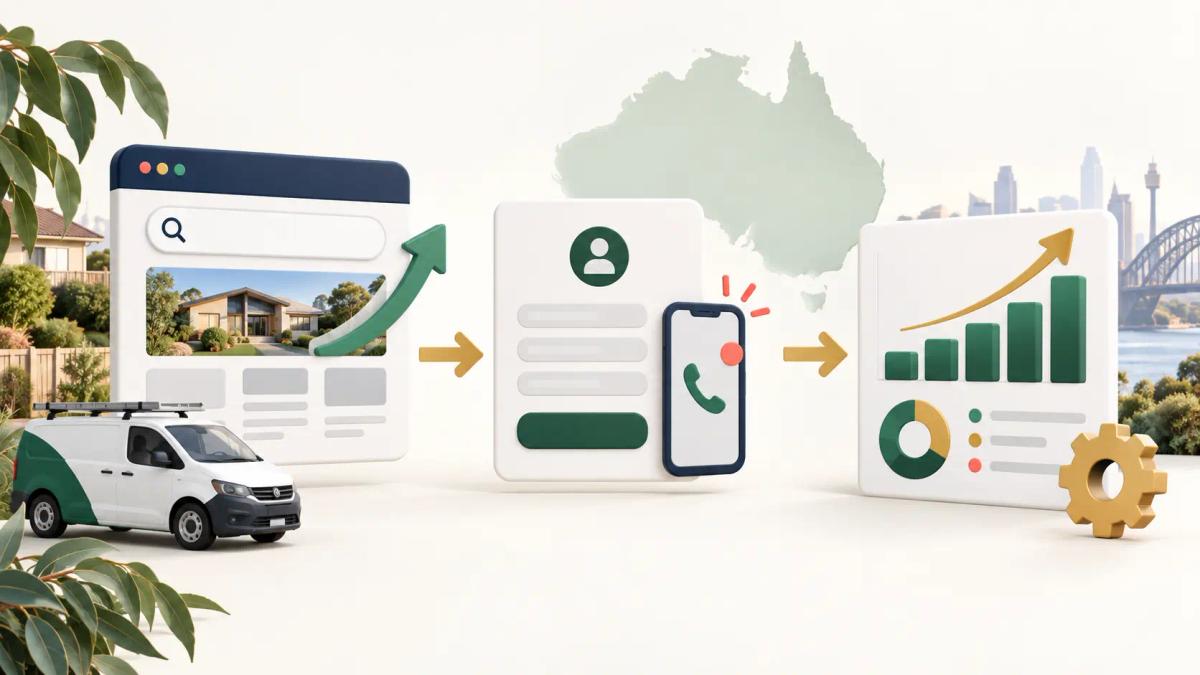
Speed matters, particularly for urgent household issues and competitive local searches. But a fast reply should still be useful. An automatic message can confirm that an enquiry was received; it should not pretend a booking is confirmed or create expectations the business cannot meet.
Create a simple internal standard for who owns a new lead, how quickly they respond and what happens if the caller cannot be reached. The process could be as simple as: enquiry received, acknowledgement sent, office or technician contacts the customer, lead is marked as booked/quoted/not suitable, and the next task is assigned. What matters is consistency.
For complex commercial or strata opportunities, record enough detail to keep the conversation coherent if it passes between team members. Repeating information frustrates customers and signals disorganisation. A CRM does not have to be complicated; it needs to reflect how your business actually turns an enquiry into work.
Use reporting to make better decisions, not more dashboards
The most useful pest control lead-generation reporting connects marketing activity to commercial outcomes. Review a small set of measures regularly:
- Enquiries by source: organic search, Google Business Profile, paid search, referrals, social or direct traffic.
- Qualified leads by service type and service area.
- Time to first human response.
- Booking and quote rate.
- Quote acceptance rate where appropriate.
- Cost per qualified lead and cost per booked job for paid activity.
- Revenue or expected value from each service line, where your records allow.
Look for patterns before making big changes. A page that produces fewer enquiries but more commercial assessments may be more valuable than a general page with a high volume of price-only calls. Equally, an ad campaign that brings bookings in one area may not translate to a wider region without changes to budget, travel time and local competition.
Set a simple monthly review: what created the most suitable enquiries, where did response slow down, what did customers keep asking, and which one improvement will you test next? This is how a 90-day plan becomes a durable operating habit.
Build a marketing system your team can keep running
The strongest marketing is not a one-off campaign. It is a repeatable process that keeps service information current, gives customers a straightforward route to contact you and helps the team learn from the leads they receive.
Start with the foundations: priority services, clear pages, accurate local information, lead tracking and prompt follow-up. Then add focused content, targeted advertising and automation only where they support the customer experience and the team’s capacity. Over time, that produces a clearer brand, more useful data and a higher chance that new enquiries become the right kind of work.
If you want to turn this plan into a practical system for your business, talk to AIECOMSolutions about your website, lead flow and growth priorities.
NEXT STEP
Ready to Work With a Team That Actually Delivers?
Book a free strategy call. No pitch. Just honest advice.